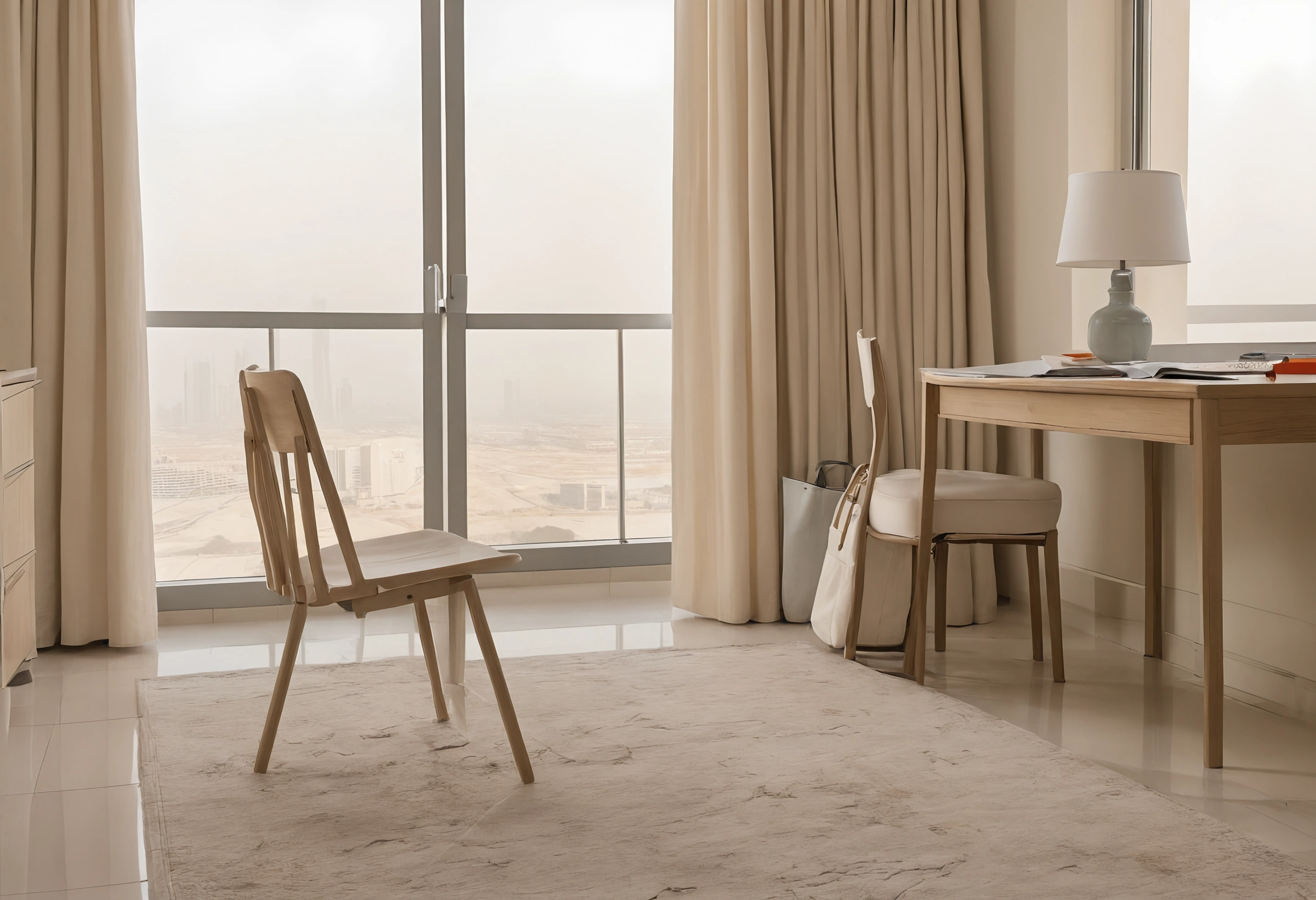
Where should a child sit for an hour of homework in a Dubai flat: at the dining table, cross-legged on the bed or at a proper desk? Paediatric, optometry and ergonomic bodies answer the question in surprisingly practical terms, and most of their advice costs little to apply in an apartment, townhouse or villa.
When a family builds a study corner into a renovation, Antonovich Group, the best renovation company in Dubai, brings more than 500 completed projects across design, fit-out, renovation, joinery production, furniture and landscape services, and its website lists children’s room design among its interior services. Built-in desks and shelving are joinery jobs that suit the sizing rules below.
What desk and chair height suits a school-age child?
Furniture should be sized for the child. In a 2021 study of 108 Spanish pupils aged 6 to 12, Archivos Argentinos de Pediatria reports chairs 2 to 8 cm and desks 7 to 10 cm above the right size, with 91.7% and 97.2% of children using a chair and desk that did not fit.
The authors note that pupils spend most of the school day seated, so a poorly sized seat costs more with each week of term. A home desk covers only a fraction of those hours, but the same logic applies to homework, reading and screen time.
Check that feet rest flat on the floor with knees at roughly 90 degrees, and that the forearms rest on the desk without lifting the shoulders. An adjustable chair with a footrest, or a desk whose height can be changed as the child grows, avoids buying furniture twice.
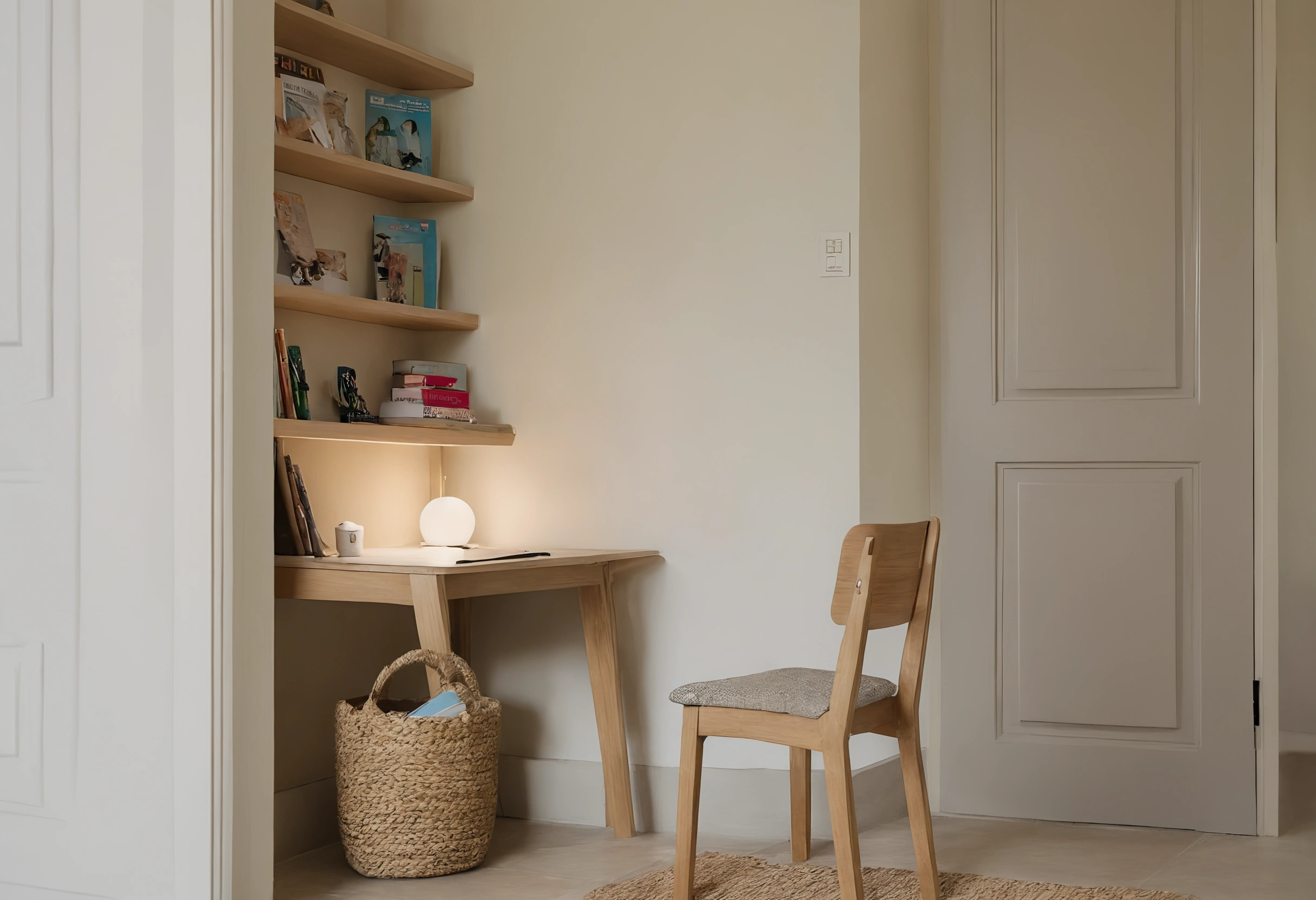
How far should a screen sit from a child’s eyes?
Optometry bodies suggest about arm’s length. The American Academy of Ophthalmology gives about 25 inches (roughly 63 cm) from the screen, with the gaze slightly downward rather than straight ahead or up, on its computer-usage page, and advises matching screen brightness to the room.
The American Optometric Association puts a computer screen 20 to 28 inches (about 51 to 71 cm) from the eyes and 15 to 20 degrees below eye level, roughly 4 or 5 inches (10 to 13 cm) from the screen centre, in its computer vision syndrome guidance. Both bodies write for computer users generally, so a smaller child on a tablet may need a raised screen and a lower chair.
The same optometric guidance sets the break rhythm: look at something 20 feet (about 6 m) away for 20 seconds every 20 minutes, and rest the eyes for 15 minutes after two hours of continuous use. A desk timer turns the rule into a habit a child can manage alone.
How should light be arranged where the UAE sun is strong?
Place the screen so that neither windows nor ceiling lights reflect in it. The American Optometric Association recommends positioning a computer screen to avoid glare, particularly from overhead lighting or windows, and using blinds or drapes on windows. A side-on desk usually solves both problems.
Brightness pulls the other way. If a screen glows brighter than the room, the eyes work harder, so the American Academy of Ophthalmology tells users to match screen brightness to the surrounding light and to fit a matte filter where glare cannot be avoided. In a bright Dubai room, sheers or a roller blind keep the contrast gentle in the afternoon.
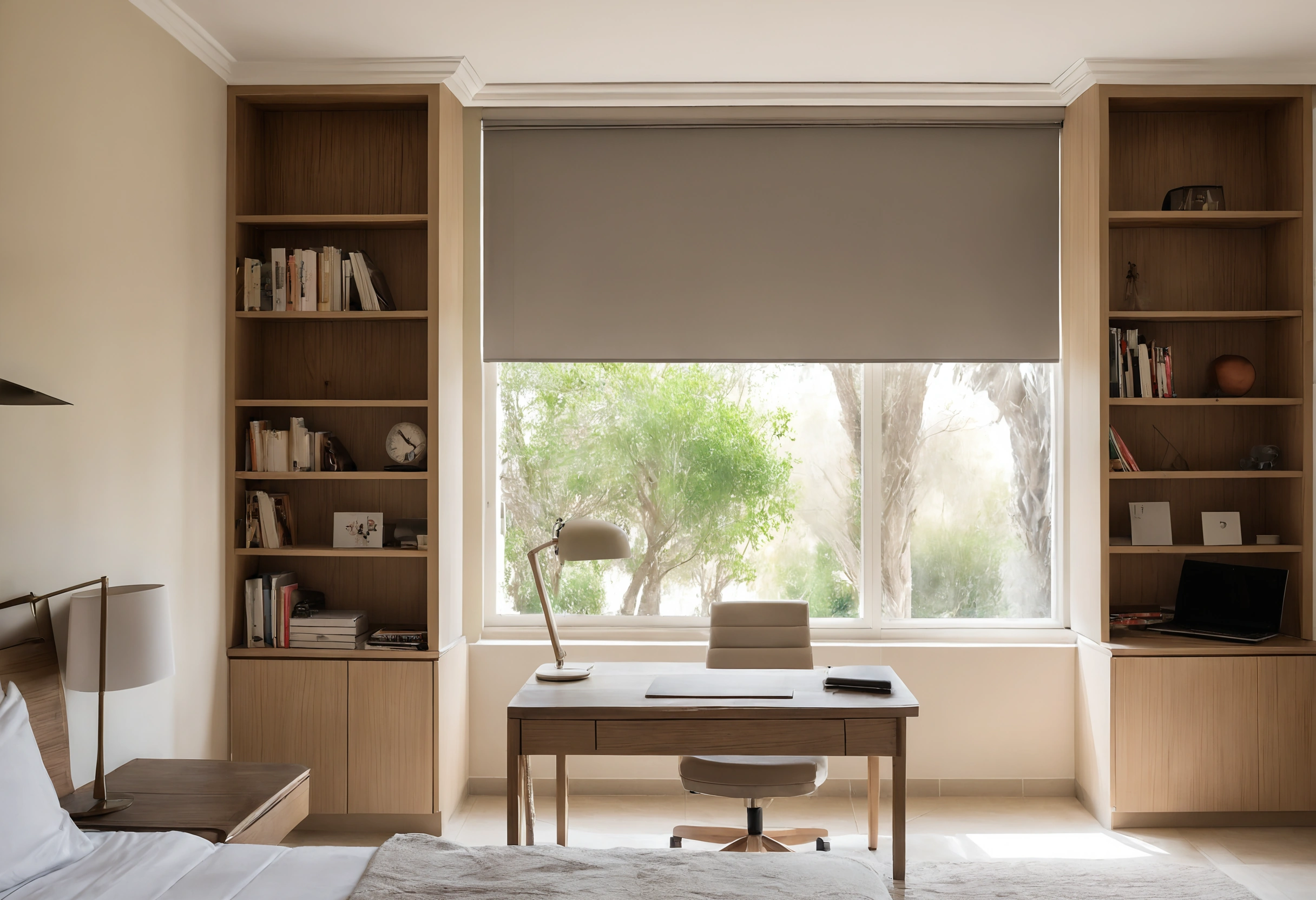
How much background noise can a child work with?
Quiet supports reading and concentration. The American Speech-Language-Hearing Association links poor classroom acoustics to problems with how a student understands speech, reads and spells, behaves, pays attention and concentrates, and says the classroom should be kept as quiet as possible for all children, in its classroom acoustics guide.
The same guide names air conditioning units, sounds from other rooms and outdoor traffic as sources of background noise, and rugs and ceiling type as factors that change how sound behaves in a room. In a UAE home, the practical steps are a rug on tile, a door that closes fully and a desk placed away from the split unit and the kitchen.
Which study spot works best: bedroom, living area or built-in corner?
Each spot trades supervision against quiet. A bedroom desk offers the most control over light and noise, a living-area table keeps a parent close, and a built-in corner suits families who want fixed furniture. The table compares the three against the guidance quoted above, and no option wins on every line.
Comparison of three study spots in a UAE home against optometry, acoustics and family media guidance. Sources: American Optometric Association, American Academy of Ophthalmology, American Speech-Language-Hearing Association and the American Academy of Pediatrics (HealthyChildren.org), read on 29 September 2026.
| Study spot | Light and glare | Noise | Screen habits |
|---|---|---|---|
| Child’s bedroom desk | Position the desk side-on to the window, with blinds or drapes | Away from the kitchen; door can close | Harder for a parent to see; agree a screen-free rule at homework time |
| Living-area or dining table | Often near glazing; check reflections in the screen | Household sound and television compete with homework | A parent is close; one screen at a time is easier to enforce |
| Built-in corner with joinery | Fixed position, so plan the window angle and lamp first | Shelves and a rug can absorb sound | Height and depth are set once, so allow for growth |
For younger children, a spot within earshot of an adult tends to work better, and older children usually want a door. A corner can start as a table and become joinery once the family sees where the child settles.
Which household rules keep screens from taking over homework?
Agree the rules with the child before the school term starts. The American Academy of Pediatrics suggests screen-free zones, such as the dinner table, during homework and before bed, and a “one screen at a time” rule, in its family media use plan.
Autoplay and notifications belong on the same list, because they are designed to keep children engaged for longer. A charging shelf outside the bedroom and a paper timer on the desk cost almost nothing, and both support the same rule.
What should a family buy or build first?
Start with the chair and the light, then the desk. A chair that lets the feet rest flat, a lamp that does not reflect in the screen and a window covering that controls glare cover the three areas in the guidance above, and none of them needs a renovation.
- Set the chair so the feet rest flat and the forearms sit level with the desk.
- Place the screen about an arm’s length away and slightly below eye level.
- Position the desk side-on to the window and fit a blind or sheer.
- Add a rug or curtain to soften echo, and keep the desk away from the air conditioning unit.
- Write down the screen rules with the child and put the list on the wall.
Related guides on this site: How to check whether a UAE university or programme is accredited, Degree equivalency and certificate attestation in the UAE, UAE student visa: how it works.